The Brief
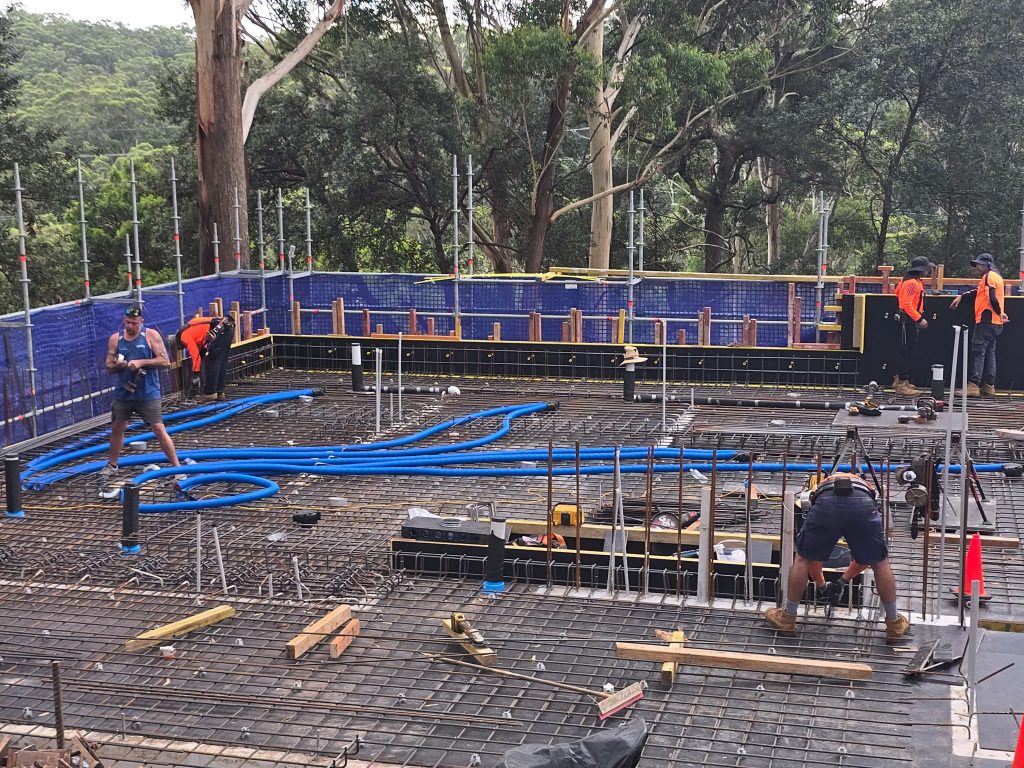
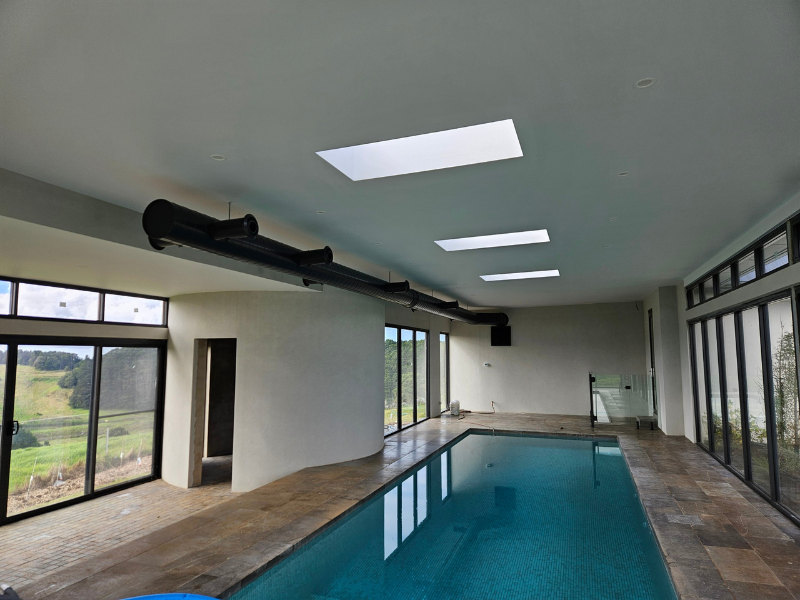
Pine Group was engaged to install a dehumidification system in a newly built residential home in Robertson, NSW, featuring an indoor pool. While the property was modern and beautifully finished, it presented one key challenge — there had been no allowance for concealed ductwork or mechanical ventilation in the original design.
With moisture control critical in any indoor pool setting, the homeowners needed a reliable solution that could manage humidity, prevent condensation, and protect the building’s integrity — delivered through a clean, precise installation within the constraints of the existing structure.
The Challenge
Because the home had not been designed with integrated ventilation in mind, traditional concealed ductwork wasn’t an option. Ceiling voids were unavailable and there was no space to run ducts through internal walls — yet introducing warm, dry air and removing humid air from the pool room remained non-negotiable.
- No ceiling voids or wall cavities available for traditional concealed ductwork.
- Preventing fogged glass, mould and long-term damage to internal finishes.
- Delivering a solution that respected the architectural intent of a newly finished home.
- Targeting airflow precisely to the areas most prone to condensation — windows and glazed doors.
- 100% Heat recovery from the double crossflow heat exchanger
- Minimal Outdoor air intake — just enough to maintain air quality
- Exposed Steel ductwork solution suited to the home's architecture
Our Approach & Solution
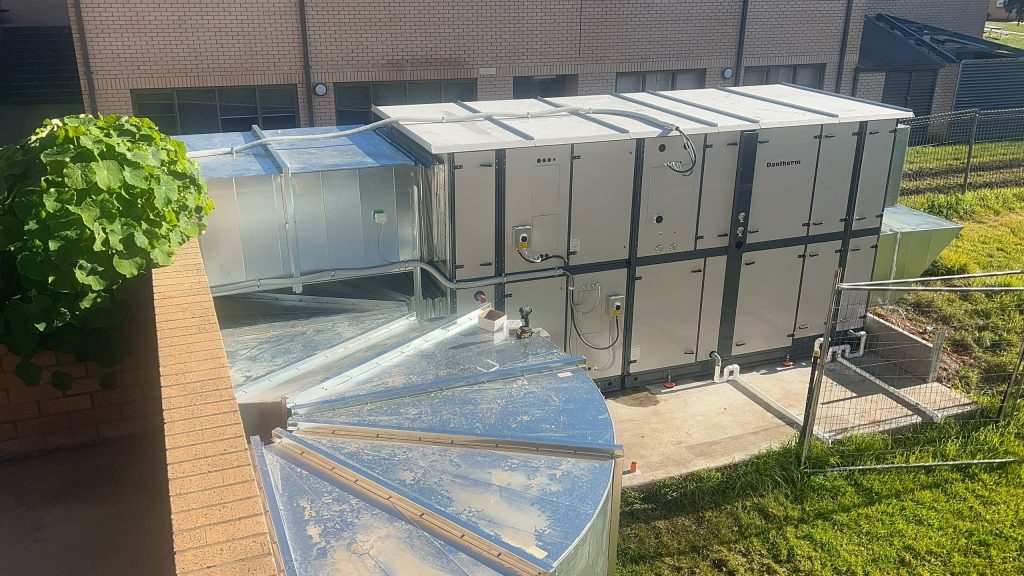
Pine Group installed a Dantherm DanX2HP Indoor Pool Climate Control System — a highly efficient unit combining a double crossflow heat exchanger with an integrated heat pump, delivering heat recovery of over 100% while keeping outdoor air intake to the minimum needed to maintain air quality.
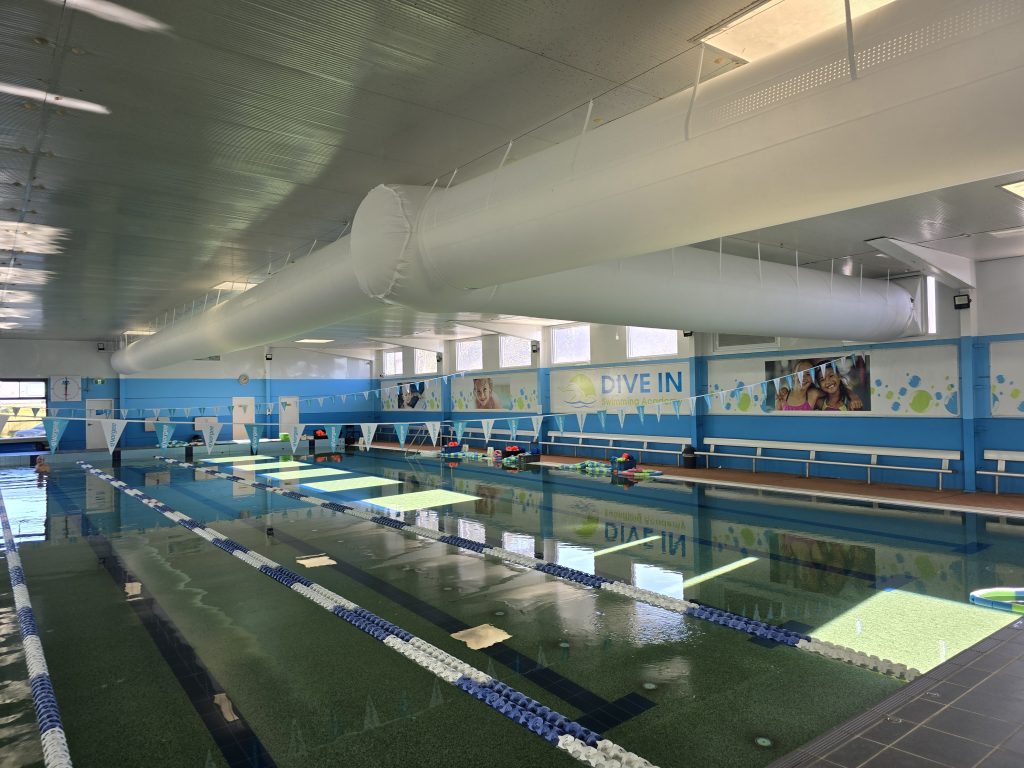
With limited space to work with, the team installed exposed steel ductwork mounted directly to the ceiling — a practical choice that also delivered a modern, industrial look in keeping with the home’s architectural style. Eyeball-style vents were positioned along the ductwork, directing targeted airflow specifically toward windows and glazed doors to control condensation exactly where it was most likely to occur.
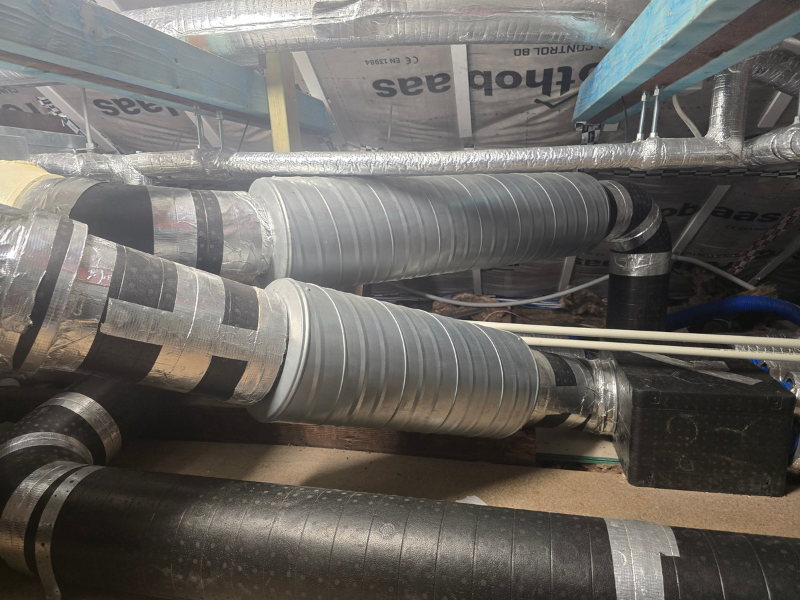
Every aspect of the installation required careful planning — from the alignment of duct sections to the placement of vents and the securing of support brackets — all while respecting the design of the finished space.
Outcomes
Once installed, the system performed as expected. The air in the pool room became noticeably more stable and pleasant, with consistent temperature and humidity levels. The client now benefits from:
- No more fogged windows or glazed doors.
- Significantly reduced risk of corrosion and dampness to the property.
- Protection of building materials, paint finishes and furnishings from moisture damage.
- A discreet, high-standard installation that preserved the home’s architectural intent.
- 38% Reduction in HVAC energy consumption
- 54% Average RH maintained at deck level
- <0.2 ppm Chloramine — below AIRAH threshold
- 100% Pool hall access maintained during installation